
Most print shops blame their press, their powder, or their film when a run of dtf transfers comes out patchy. Then they swap materials, re-profile, and the problem vanishes for a week before creeping back. What changed in between usually was not the press at all. It was the weather. Relative humidity swings more than most operators realize, and dtf printing sits right in the path of that swing because every stage of the process involves a fine powder and a thin film that react to moisture in the air.
This guide is about controlling that variable. Not the dramatic stuff like a failed press or a clogged head, but the slow, boring environmental drift that makes good equipment behave badly. If your prints are inconsistent in ways you cannot quite pin down, read this before you buy another roll of film.
What Humidity Actually Does to DTF Materials
Adhesive powder is hygroscopic, meaning it pulls moisture out of the air. In a dry room it stays loose and flows evenly when you shake it over a wet print. In a damp room it starts to clump, sticks to itself, and lands in uneven patches. Those patches cure unevenly, and an uneven cure is exactly what produces the gritty, flaking edges that show up after a few washes.
Film is the second victim. PET transfer film absorbs a small amount of moisture at the edges, which makes it cup, curl, and feed unevenly through the printer. Curled film is a common cause of head strikes and smeared prints, and it is almost always worse in a humid room than a dry one.
Ink is the third. Water-based dtf ink needs to dry on the film before powder goes down. In high humidity that drying step slows noticeably, so the powder hits a wetter surface than your settings assume. The result is powder that sinks in, over-saturates, and leaves a heavy, crusty deposit instead of a clean, even layer.
The Ideal Range and Why It Matters
Most reputable material suppliers recommend storing and printing in a space held between roughly 40 and 60 percent relative humidity, at a temperature around 20 to 24 degrees Celsius. You do not need a laboratory. You need a cheap hygrometer on the wall and the discipline to check it before a big run. A reading of 65 or 70 percent is not a disaster, but it is a signal to adjust your process, not to ignore the number and hope.
Signs Your Shop Has a Moisture Problem
Humidity issues rarely announce themselves. They show up as a pattern of small, repeating annoyances that you keep attributing to something else. Watch for these:
- Powder clumps in the shaker or forms hard little beads on the film.
- Film curls at the corners straight off the roll or after a few minutes on the platen.
- Prints feel tacky longer than usual before powdering.
- Cured transfers show a rough, sandpaper-like surface instead of a smooth matte finish.
- The same press settings that worked last month now leave dull or partially bonded prints.
- Wash failures cluster in certain weeks, especially in spring and autumn.
If two or more of these line up, check your hygrometer before you touch a single setting. It saves hours of pointless re-profiling.
Practical Fixes That Cost Little
You do not need a climate-controlled cleanroom to print dtf transfers reliably. You need to reduce the moisture load and keep it stable. Here is what actually works in small shops.
Seal and Store Powder Properly
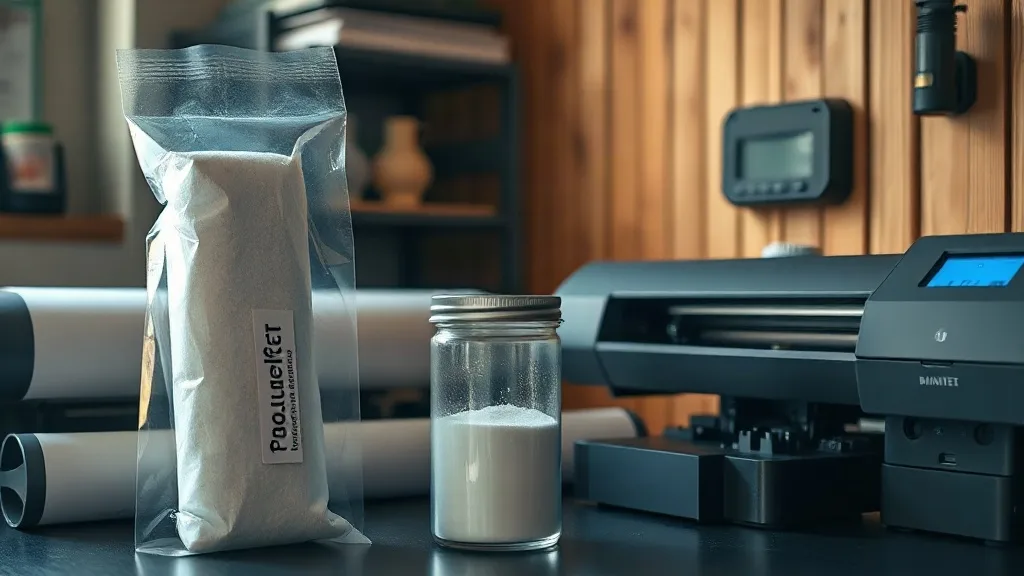
Powder should live in an airtight container, not an open bag with a scoop sitting in it. Every time you open a bag in a humid room, you invite moisture in. Transfer powder into a sealed jar with a tight lid and keep a silica gel packet inside. If powder already feels heavy or clumps between your fingers, dry it gently in an oven at low heat or replace it. Never press clumped powder and expect a clean result.
Control the Room, Not Just the Press
A small dehumidifier in a 20 to 30 square metre shop is often enough to pull humidity down into the safe band. Run it continuously rather than only when you notice problems, because stability matters as much as the absolute number. Keep the machine away from open windows, steamy washrooms, and doors that let damp air in from outside. If your shop shares space with a washer and dryer, that is a major humidity source and needs its own ventilation.
Adjust Drying Time Before Powdering
In damp conditions, give prints an extra minute or two to dry before powdering, or use a gentle warm airflow over the platen. This is a small change that fixes a surprising share of powder-clumping complaints, because dry ink holds powder evenly and wet ink does not.
Condition Film Before Use
If film has been stored in a damp area, let it acclimatize in the print room for a few hours before loading it. Store rolls upright in sealed bags with a desiccant sachet. Curled film is easier to prevent than to fix, so treat storage as part of the process.
Seasonal Patterns Worth Planning For
Shops in humid climates often find that summer runs need different handling than winter runs, and the same is true in regions with wet springs. Rather than constantly re-tuning, record your hygrometer reading next to each batch of press settings. After a month or two you will have a small table that tells you which settings suit which conditions, and you can match them at a glance. This is far more reliable than trusting memory.
If you are sourcing dtf transfers near me from a local supplier, ask how their stock is stored. Powder and film that sat in a damp warehouse before it reached you can arrive already compromised, and no amount of tuning your press will fully undo that.
Why This Matters More Than You Think
Most troubleshooting guides focus on the press because the press is the visible part of the process. But the press is doing exactly what you tell it to do. The invisible variables, humidity among them, decide whether the material arriving at the press is in a fit state to be pressed well. Shops that treat environment as a controlled input tend to have fewer wash failures, less rework, and calmer operators, because the variables stop shifting under their feet.
You do not need to become a meteorologist. You need a hygrometer, a dehumidifier, sealed powder storage, and the habit of checking conditions before a run. That is the whole system, and it costs less than a single wasted roll of film.
Frequently Asked Questions
Does humidity really affect DTF prints that much?
Yes, and mostly through the powder. Adhesive powder absorbs moisture from the air, which makes it clump and cure unevenly. That uneven cure shows up later as rough texture, flaking, and wash failures. Film curling and slower ink drying are secondary effects that compound the problem.
What relative humidity should a DTF shop aim for?
Roughly 40 to 60 percent relative humidity at around 20 to 24 degrees Celsius is a sensible working range. Staying stable within that band matters as much as hitting the number, because constant swings force you to re-tune settings repeatedly.
Can I rescue powder that has already clumped?
Light clumping can sometimes be fixed by drying the powder gently at low heat and breaking it up, but heavily clumped powder is best replaced. Pressing clumped powder rarely gives a clean bond and often wastes more time than a fresh batch would cost.
Do I need a full climate control system to print DTF reliably?
No. A small dehumidifier, sealed powder storage with a desiccant, sensible film storage, and a cheap hygrometer cover the vast majority of small shop needs. Full climate control helps at higher volumes but is not a requirement to get consistent results.
How do I know if a wash failure is caused by humidity or by press settings?
Check your hygrometer reading for that batch first. If humidity was high and powder showed clumping, moisture is the likely cause. If conditions were normal and the press settings were recently changed, look at pressure, temperature, and dwell time instead. Recording both together makes the diagnosis quick.